
State of Our Schools: Transportation and Facility Management
The State of Our Schools series explores several of the major systemic issues facing public schools within and near Indianapolis Public School (IPS) boundaries. Almost two-thirds of IPS-area students attend charter or innovation network schools and the district faces consistent enrollment and financial challenges.
The Indianapolis Local Education Alliance (ILEA) marks a once-in-a-generation moment to reimagine education for 46,000 Central Indianapolis public school students and forge a sustainable system. As the ILEA meets to form recommendations to help solve these issues, this series outlines challenges that their proposals should address and presents a range of potential solutions that should be considered. Read our previous post on school and system governance here.
School facilities and transportation management requires significant financial and staffing resources to meet the needs of all students. The current reality of school and system governance in Indianapolis has led to schools and districts running multiple facility and transportation systems at the same time. This significant work must be managed in addition to their most important responsibility to ensure a high-quality academic experience for all students.
Since the ILEA started their work, there has been growing interest in key operations, like transportation and facilities management, for all public schools within IPS boundaries to come under one authority. This could be an important step forward for our city’s education system. However, for this approach to work, it must ensure the managing entity is free from conflicts of interest. Any approach must be neutral and independent, in order to ensure truly fair access to all students. An example of this in action is Enroll Indy, an independent nonprofit organization that manages enrollment for all IPS schools and the vast majority of independent charter schools in Indianapolis. Enroll Indy manages a shared set of deadlines and policies that have increased fair access to high-quality schools.
The ILEA is required to conduct a school facility assessment and develop a plan for transportation and facilities that includes a long-term asset management and sustainability plan. Alliance members have an opportunity to examine ways for IPS, charter, and innovation network schools to work collaboratively to better steward resources and ensure more students can access the education they deserve.
What are current facility management and access challenges?
In fall 2024, IPS owned and managed 72 school facilities, which are either directly operated by IPS or utilized by an innovation network school. Although revenue continues to increase, enrollment in IPS-operated schools steadily declines, dropping 4% last year. According to IPS financials, the district faces an $18 million budget deficit this year, projects a $44 million deficit in 2026, and a $75 million deficit in 2027. The Rebuilding Stronger plan did not right-size the district’s facility footprint enough to alleviate underutilization of buildings or drive enrollment to lessen a looming financial crisis. With the re-opening of Broad Ripple and Howe, the district is now managing more square footage with fewer students than they did prior to Rebuilding Stronger. The district’s building utilization rate is approximately 57.5%.
Charter school enrollment has steadily risen. In the 2024–2025 school year, 61% of students within or near IPS boundaries attended charter or innovation network schools, up from 51% in 2019–2020. Based on square footage previously collected from school operators and innovation charter information provided by IPS during the Rebuilding Stronger planning period, independent charters and innovation charters are, as a sector, over-capacity. Independent charter school facilities are utilized at approximately 128%, while innovation charter schools are 118% utilized.
Proven charter operators have expanded and new innovative models have opened to meet family demand, but charter schools do not have access to buildings that are outfitted to meet all academic, athletic, and extracurricular needs. Additionally, unlike school districts, charter schools do not have dedicated revenue sources to address facility needs. Districts can issue municipal bonds or raise funds through capital referenda, options that are not available to charter schools.
District, charter, and innovation network leaders all face the challenge of managing a complex set of regulations and maintenance tasks that take away from their main goal of improving student achievement.
How does the “Dollar Law” impact facility management?
Indiana’s “Dollar Law” requires a district to close a school building and make it available to a charter school to lease or purchase for $1 if enrollment has averaged less than 50% of the building’s capacity for three years. As of October 2025, Susan Leach School 68 and Raymond Brandes School 65 have been made available under the law, which was created to offer charter schools better access to facilities and foster growth of high-quality public school options.
While the law has provided several charter networks with access to a facility, it does not solve underlying utilization and financing challenges, especially if the buildings available have significant deferred maintenance issues. Additionally, declining enrollment will likely lead to more IPS buildings qualifying under the law in the next few years.
What are current transportation management and access challenges?
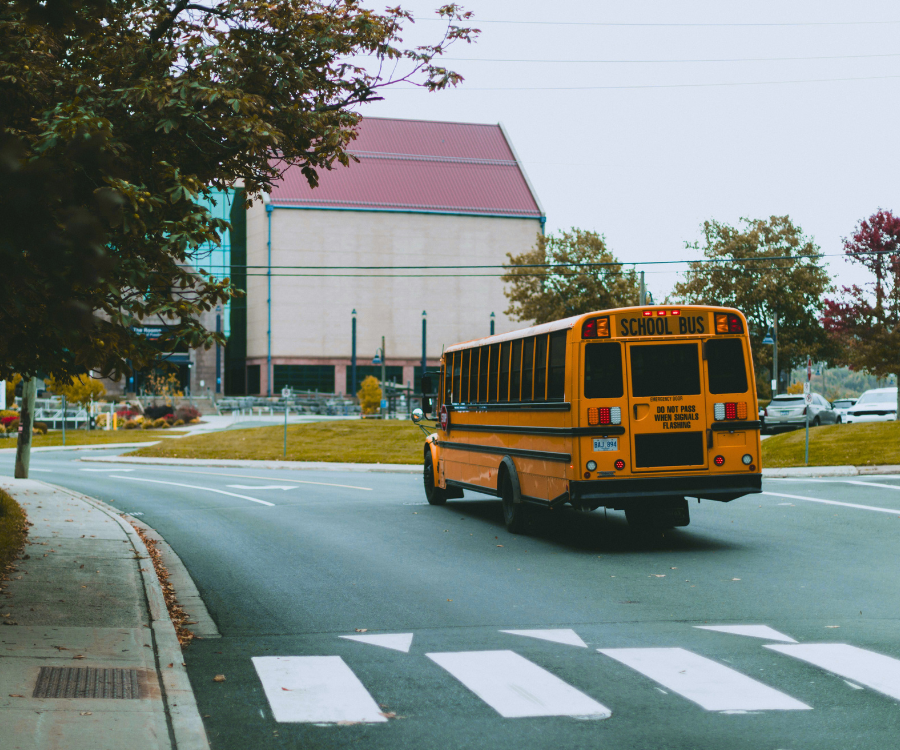
School transportation still relies heavily on yellow buses and a small number of transportation management companies that operate in Indiana. Schools of all types face challenges with driver shortages, rising costs, routing, maintenance, and other aspects of transportation logistics. Schools in Indiana must use operating funds, which are funded by property tax revenue, to pay for transportation costs. Since charter schools do not have full access to property tax revenue, this funding disparity has led to an unequal balance of access to transportation between district, innovation, and charter schools.
IPS currently manages transportation services for students attending IPS-operated schools and some innovation network schools that opt in to services. Many independent charter schools offer some level of transportation service, but are limited in their reach since property tax sharing has not yet phased in. There are multiple school transportation systems running at the same time, with an unequal balance of what each school type can offer.
Despite the district transporting more students and taking advantage of some economies of scale, IPS transportation costs are still higher than many charter school transportation costs. At the September 2025 ILEA meeting, IPS shared the cost per student for the 2025-2026 school year is $2,300, with an estimated increase to $2,500 for next school year. Victory College Prep, a K-12 charter school, has the city’s second largest transportation service network after IPS. Their cost per student is approximately $1,700.
Since the majority of students who reside within IPS boundaries actually attend a charter or innovation network school, the ILEA should consider recommendations that expand access to safe, reliable school transportation for all students. Charter and innovation network schools serve a majority of students of color and low-income students, so recommendations should ensure full, fair access to students in these schools. Recommendations should create a way for an efficient system to exist that does not place a heavy staffing or resource burden on schools and districts.
What is the Indianapolis transportation and facilities pilot?
HEA 1515 created the School Facilities and Student Transportation Pilot Program, designed to promote innovative, collaborative solutions that improve how school transportation and building resources are managed across public, charter, and nonpublic schools. Managed by the Indiana Department of Education (IDOE), the pilot program aims to help schools and districts across the state address common transportation and facility management challenges.
Pilot programs can explore solutions that also grow access to school options, tutoring, before- and after-school programming, and extracurriculars. Additionally, with the changes to Indiana high school diploma requirements, pilot programs should also aim to explore ways to grow access to and from internships and work-based learning opportunities. Selected pilot participants are expected to:
- Establish an independent local board to oversee implementation;
- Submit a comprehensive pilot program plan;
- Collect and report data aligned with IDOE metrics;
- Implement innovative practices that may serve as statewide models;
- Engage in regular collaboration with other pilot participants;
- Provide feedback to inform long-term sustainability and policy recommendations.
A coalition of more than 50 Indianapolis schools representing nearly 22,000 students applied and were accepted into the three-year pilot program, which will be coordinated by TogetherEd, a nonprofit that works with schools and community organizations to strengthen operations, finance, and other systems. The pilot is distinct from the ILEA and will offer participating schools the opportunity to develop and test strategies starting in fall 2026.
ILEA members have four primary pathways to consider for recommendations on transportation and facility management:
- Create an independent authority for transportation and facilities for all public schools within IPS boundaries: The authority would oversee transportation and facility asset management, operations, data collection, safety, and finances for all schools within IPS boundaries. This neutral, separate authority would not be solely managed by the district or charter schools, allowing for unbiased decision making.
- Recommend IPS manage transportation for all public schools within IPS boundaries: While this could add some additional access to transportation, there is an inherent conflict of interest and risk of the district prioritizing students in IPS-operated schools over students from other school types, despite most public school students attending charter and innovation network schools. In 2024-2025, IPS-operated schools served 18,181 students, compared to 27,951 students in charter and innovation network schools. It should be noted that the same conflict of interest would be true if a charter operator managed transportation for all students within IPS boundaries.
- Incentivize collaboration across sectors: Instead of structural change, the ILEA could encourage innovative ideas for transportation and facility management between IPS and charter schools, such as recommending IPS participate in the transportation pilot and/or transfer building ownership from the district to innovation charter partners. This approach risks systemic challenges remaining unsolved, even if certain innovations are realized.
- Keep the status quo: No changes to the system and IPS and charter schools continue operating separately, risking continued inefficiencies and financial strain that could lead to state takeover for the district.
Taxpayers are spending more than ever on an unsustainable system. As enrollment declines in IPS-operated schools, the district has not made appropriate reductions to its central office, the number of schools it operates, facilities holdings, or transportation systems. A coordinated approach to managing facilities and transportation could help relieve financial strain across both the district and charter sectors, ensuring that resources are allocated more efficiently over time.
Recommendations that include independently managed systems must account for potential conflicts of interest and include protections that ensure a separate entity serves all students fairly. Indianapolis’ education landscape needs bold structural change that improves services, spends taxpayer dollars wisely, and ensures schools can strengthen their focus on their true goal of academic excellence.