
Emerging and Leading: Cohort 3 is One Year In and Leading Differently
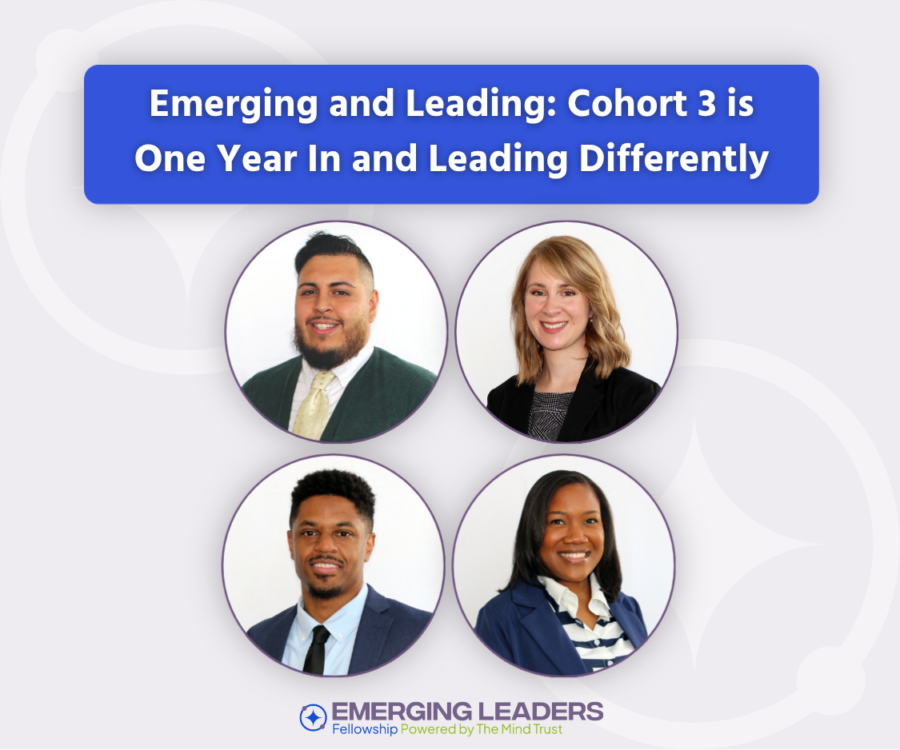
This is part 2 of the Emerging Leaders Fellowship (ELF) series, Emerging and Leading, a three-part celebration of the educators in ELF Cohorts 2, 3, and 4.
Something happens to a leader at the end of their first year in the Emerging Leaders Fellowship. They can feel it before they can fully name it. A shift in confidence, a sharpening of purpose, a deeper understanding of who they are and what they’re capable of. For Cohort 3, that shift happened in real time, across a year of professional development sessions, cohort trips, crucial conversations, and honest self-reflection.
The Emerging Leaders Fellowship is structured as a three-year journey. Year 1 is focused on self: who you are as a leader, what you value, and how you show up. Year 2 expands that lens to the school level: how you lead your team, build systems, and drive impact inside your building. Year 3 zooms out to the systems level: how you contribute to the broader landscape of education leadership across Indianapolis. Cohort 3 is one year into that journey, and the stories below showcase the individual growth and impact achieved so far.
Juan Cahue, Director of Student Support Services at Victory College Prep
Juan Cahue almost didn’t apply the second time around. He had watched the fellowship from the outside for a while, getting glimpses of what he was looking for in other leadership development experiences, but never quite finding it all. “Something was missing,” he said. Eventually, he stopped waiting for something else to fill that gap and submitted his application. He got in. And the rest, as they say, is history.
The first year of ELF gave Juan a foundation he didn’t have before: a clear sense of his own core values and how they connect to the work he does every single day. The June professional development on self-identity and core values landed early and landed hard. “I carried that into everything that I did later in the year,” he shared. Through his work with teachers, his support for special education and multilingual learners, and the way he shows up in every room he walks into.
The leadership skill Juan strengthened most this year: having difficult conversations. He spent the year learning to hold others accountable, advocate for students and staff, and speak up. “Whether or not I felt like it would put a strain on the relationship, I just knew I had to do what was right.”
A pivotal session came from a professional development led by Jill Dunchik just a few weeks into the school year, focused on the basics of coaching and on presenting to other adults. Walking through coaching models, receiving feedback on presentations to parents and families, and practicing crucial conversations gave Juan practical tools he could use immediately.
What surprised him most about the fellowship was the cohort. He didn’t expect to build the kind of friendships that led to text threads about real challenges. That kind of support shows up when you need it most and reminds you that you are not alone in this work.
His advice to anyone considering applying: “If you’re someone who’s considering applying to ELF, you get out of it exactly what you put into it.”
Amanda Calkins, Network Instructional Coach at Avondale Meadows Academy
Amanda Calkins is proof that persistence pays off. She applied to ELF once before being accepted, and she will tell you that not getting in the first time was itself part of her growth. She came back stronger, more prepared, and with a resilience that set the tone for everything that followed.
Entering the fellowship, Amanda felt the familiar creep of imposter syndrome as she met accomplished peers from across the city. By the end of her first year, that had been replaced by something more durable: real clarity about who she is as a leader and genuine confidence in her role.
The biggest leadership shift for Amanda this year was moving away from a directive coaching style toward true partnership. She now co-plans with teachers, works through action steps collaboratively, and gives real-time in-classroom feedback rather than waiting until after an observation to share her notes. That shift in mentality, she says, is everything. “I get to see teachers have little nuggets of excitement around their content and help them take that nugget and run with it.”
What grounds her every day is her “why,” something ELF helped her consistently identify and return to. “Being able to live with that every day and use it to drive my leadership has been huge,” she said. “I can be grounded in my why to help me persevere through whatever hurdles come up.”
For Amanda, the cohort experience has been one of the fellowship’s greatest gifts. The small size creates a family-feeling school context, which means that every conversation teaches her something new.
Her advice to someone on the fence about applying: “Go for it. Yes, the process is hard. But you learn a lot even through the application.”
Alex Stowers, K–8 Associate Principal at Christel House Academy South
Alex Stowers came into ELF knowing what he wanted and was honest about why. “There were times at other schools when I did not get the support and development I needed and wanted,” he said. “This felt like the perfect opportunity.” What he found was even more than he expected.
The word Alex keeps coming back to when describing his first year is intentionality. Every professional development session, every interaction with a mentor, every moment of the fellowship has pushed him to be more deliberate about his time, his meetings, his conversations with teachers, and the way he shows up every day. “I’ve gotten a lot better at focusing on the little things,” he said, “and that has translated to growth in our students.”
The leadership skill he strengthened most: building a culture of accountability and feedback. He now uses feedback consistently across data meetings, internalization meetings, and one-on-ones with teachers, holding himself to the same standard he holds others. “When you’re given feedback, you have to use that feedback to improve instruction, to improve your meetings, to improve how you talk to people.”
The most pivotal experience of Alex’s first year was the cohort trip to Chicago, which focused on school culture and setting the standard for the year. Sessions on tone, crucial conversations, and communication gave him tools he started using immediately. A professional development session on AI helped him implement practical solutions at Christel House, including a parent newsletter and a front-desk support system. A December step-back session on six-week planning and a visit to Atlanta to observe high-performing charter schools rounded out a year of continuous, practical growth.
Perhaps the biggest surprise of all: his confidence. “Going into the Emerging Leaders Fellowship, I felt decent,” he said. “After this year, with Dr. P, with my fellow members of the corps, I feel amazing. I feel very confident going into my second year.” He came in thinking he was a “middle-of-the-road” assistant principal. He leaves Year 1 believing he could lead a school.
His advice to anyone on the fence: “Absolutely send in that application. Even if you don’t get it, there’s feedback that is given, and that feedback matters.”
Jasmine Walton, K–2 Assistant School Leader at Circle City Prep
Jasmine Walton was referred to ELF by the head of her school. She wasn’t sure at first, but being thought of that highly was both surprising and motivating. Trying ELF turned out to be one of the best professional decisions she’s ever made.
Jasmine came in knowing who she was as a teacher. As a leader, she was still figuring herself out, which is exactly what Year 1 helped her do. The deep reflective work started from the very first session and never let up. “I want to find out who I am as a person and as a leader,” she said early in the year. “I stand ten toes down on that.”
The skill she strengthened most: difficult and crucial conversations. Learning to hold others accountable and lead even when it feels uncomfortable has been the defining growth of her first year. “One of the sessions that helped me most was the crucial conversations session,” she shared. “Having that space to practice those conversations and prepare for really important ones helped me become more direct, more honest, and better at just showing up.”
What does leadership mean to Jasmine now, while finishing Year 1? “Being a leader means showing up. Especially when it gets hard.” Every decision she makes is grounded in her why, keeping student outcomes at the center of everything.
The biggest surprise of the fellowship: the depth of community built within the cohort. She has learned something from every single person she has encountered, whether big or small. “I was not sure what I would learn from everyone,” she said. “But I can tell you I’ve learned something from every single person I’ve encountered since I began this fellowship.”
Her advice to someone considering applying: “Do it, but be prepared to be vulnerable and very honest with yourself. The work required to apply is minimal. The impact it’s going to have on you, the people you lead, and the students is greater.”
The First Year Changes Everything
For Cohort 3, Year 1 of ELF was transformational. Four professionals entered the fellowship and are leaving their first year as stronger leaders who know themselves more deeply, hold their teams accountable more effectively, and show up at their schools with clarity and confidence that did not exist 12 months ago.
Want to learn more about the Emerging Leaders Fellows? Meet all of our current fellows at themindtrust.org/fellows. To learn more about the fellowship, visit themindtrust.org/emerging-leaders-fellowship.